
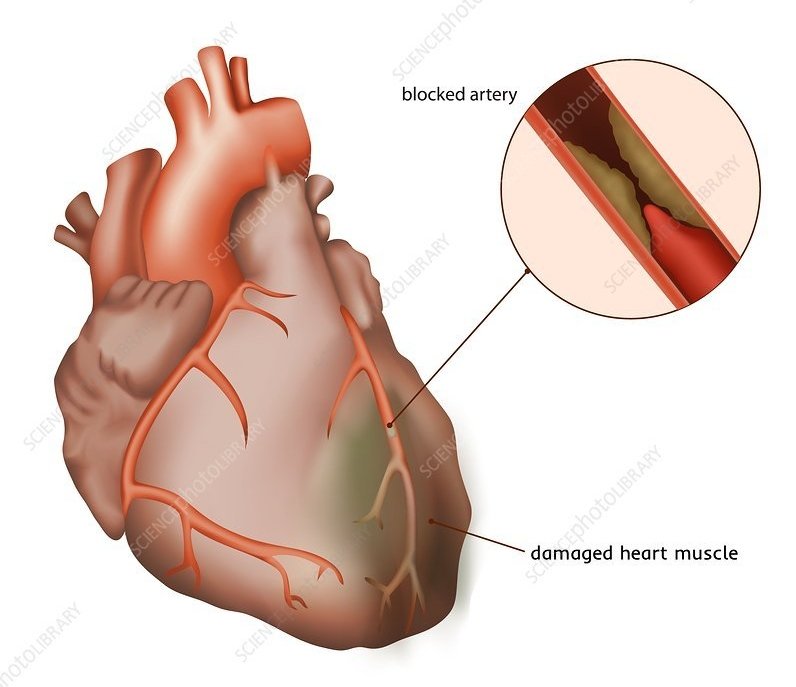
Ischemic heart disease due to the effects of atheroma, causing narrowing or occlusion of one or more branches of the coronary arteries. Atheromatous plaques cause narrowing. Occlusion may be by plaque alone or plaques complicated by thrombosis. Narrowing of an artery leads to angina pectoris and occlusion to myocardial infarction.
Angina pectoris
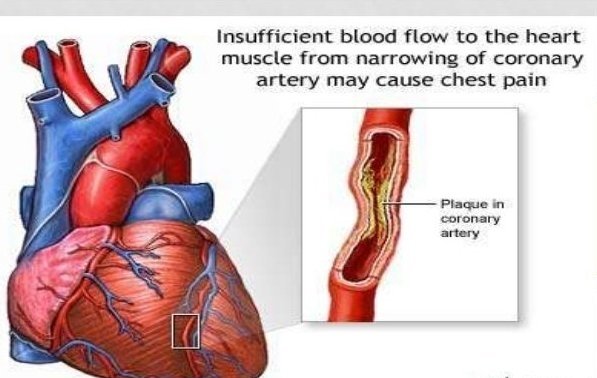
This is sometimes called angina of effort because the increase cardiac output required during extra physical effort causes severe chest pain, which may also radiate to the arms,neck and jaw. Insufficient blood flow to the heart muscle from narrowing of coronary artery may cause chest pain.
Myocardial infarction
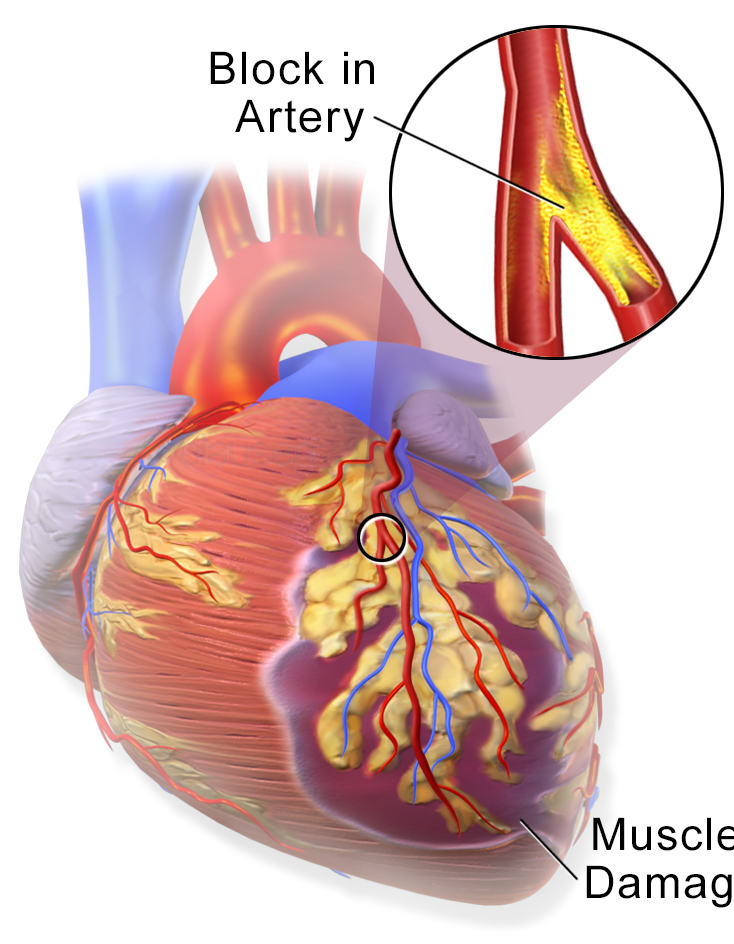
The myocardium may infarct when a branch of a coronary artery is blocked.the commonest cause is an atheromatous plaque complicated by thrombosis. The extent of myocardial damage depends on the size of the blood vessels and site of the infarct.the damage is permanent because cardiac muscle cannot regenerate and the dead muscle is replaced with non functional fibrous tissue.
Symptoms of myocardial infarction
1. tightness in the chest
2. Chest pain which may also radiate to the arms,neck and jaw
3. Shortness of breath
4. Sweating
5. Nausea
6. Vomiting
7. Cough
Complications
1. Severe arrhythmias
2. Acute heart failure
3. Rupture of a ventricle wall
4. Pulmonary or cerebral embolism
5. Pericarditis
6. Angina pectoris
 chandimadura